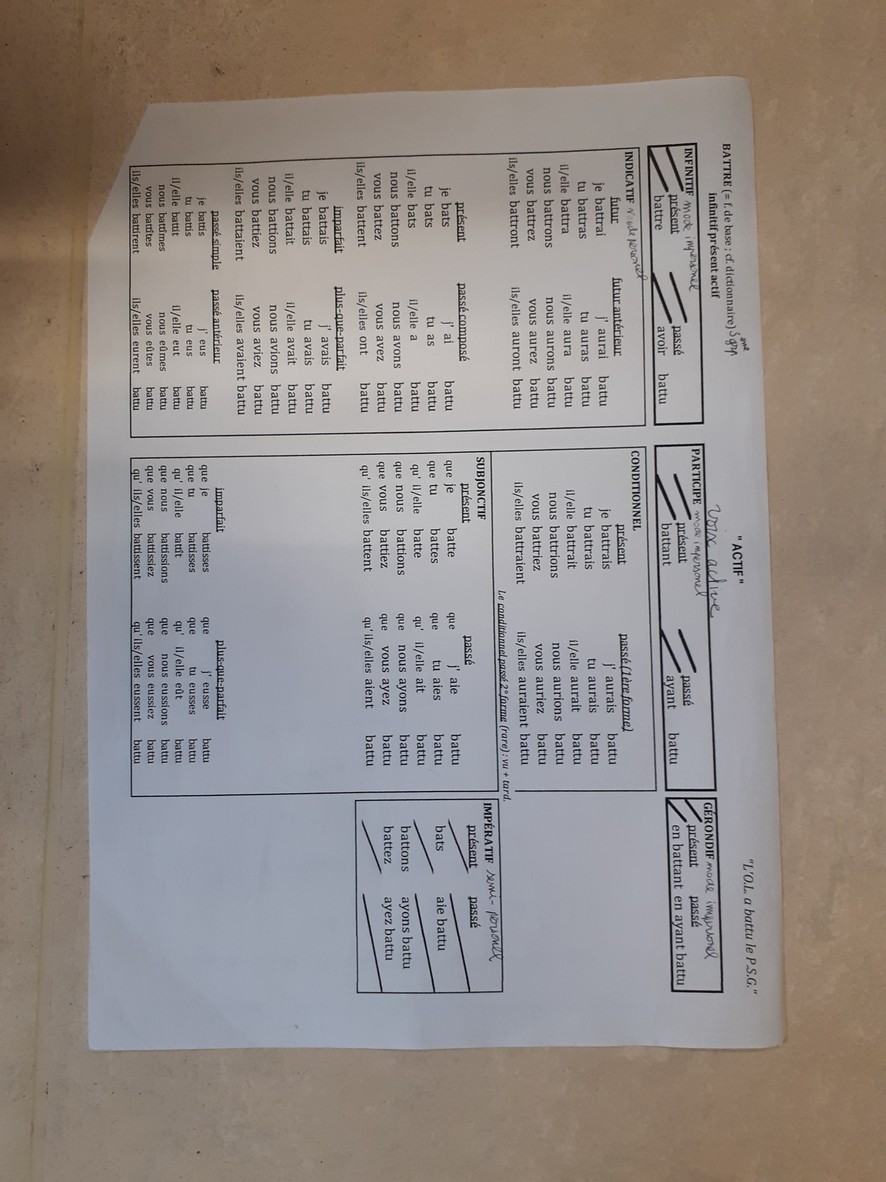
I beat
you beat
he/she/it beats
we beat
you beat
they beat
Present indicative conjugation. Current action.
0
imperfect
imparfait
I was beating
you were beating
he/she/it was beating
we were beating
you were beating
they were beating
Imperfect indicative conjugation. Past durable or habitual action.
0
simple past
passé simple
I beat
you beat
he/she/it beat
we beat
you beat
they beat
Simple past conjugation. Punctual past action.
0
future
futur
I will beat
you will beat
he/she/it will beat
we will beat
you will beat
they will beat
Simple future conjugation. Future action.
0
compound past
passé composé
I have beaten
you have beaten
he/she/it has beaten
we have beaten
you have beaten
they have beaten
Compound past conjugation. Completed past action.
0
past perfect
plus-que-parfait
I had beaten
you had beaten
he/she/it had beaten
we had beaten
you had beaten
they had beaten
Past perfect conjugation. Prior action in the past.
0
past anterior
passé antérieur
I had beaten
you had beaten
he/she/it had beaten
we had beaten
you had beaten
they had beaten
Past anterior conjugation. Past action prior to another.
0
future anterior
futur antérieur
I will have beaten
you will have beaten
he/she/it will have beaten
we will have beaten
you will have beaten
they will have beaten
Future anterior conjugation. Future action prior to another.
0
SUBJUNCTIVE
present
présent
that I may beat
that you may beat
that he/she/it may beat
that we may beat
that you may beat
that they may beat
Present subjunctive mood. Expresses doubt or possibility.
0
imperfect
imparfait
that I may beat
that you may beat
that he/she/it may beat
that we may beat
that you may beat
that they may beat
Imperfect subjunctive mood. Literary usage.
0
past
passé
that I may have beaten
that you may have beaten
that he/she/it may have beaten
that we may have beaten
that you may have beaten
that they may have beaten
Past subjunctive mood.
0
past perfect
plus-que-parfait
that I might have beaten
that you might have beaten
that he/she/it might have beaten
that we might have beaten
that you might have beaten
that they might have beaten
Past perfect subjunctive mood. Literary usage.
0
CONDITIONAL
present
présent
I would beat
you would beat
he/she/it would beat
we would beat
you would beat
they would beat
Present conditional mood. Expresses a condition or hypothesis.
0
past (1st form)
passé (1ère forme)
I would have beaten
you would have beaten
he/she/it would have beaten
we would have beaten
you would have beaten
they would have beaten